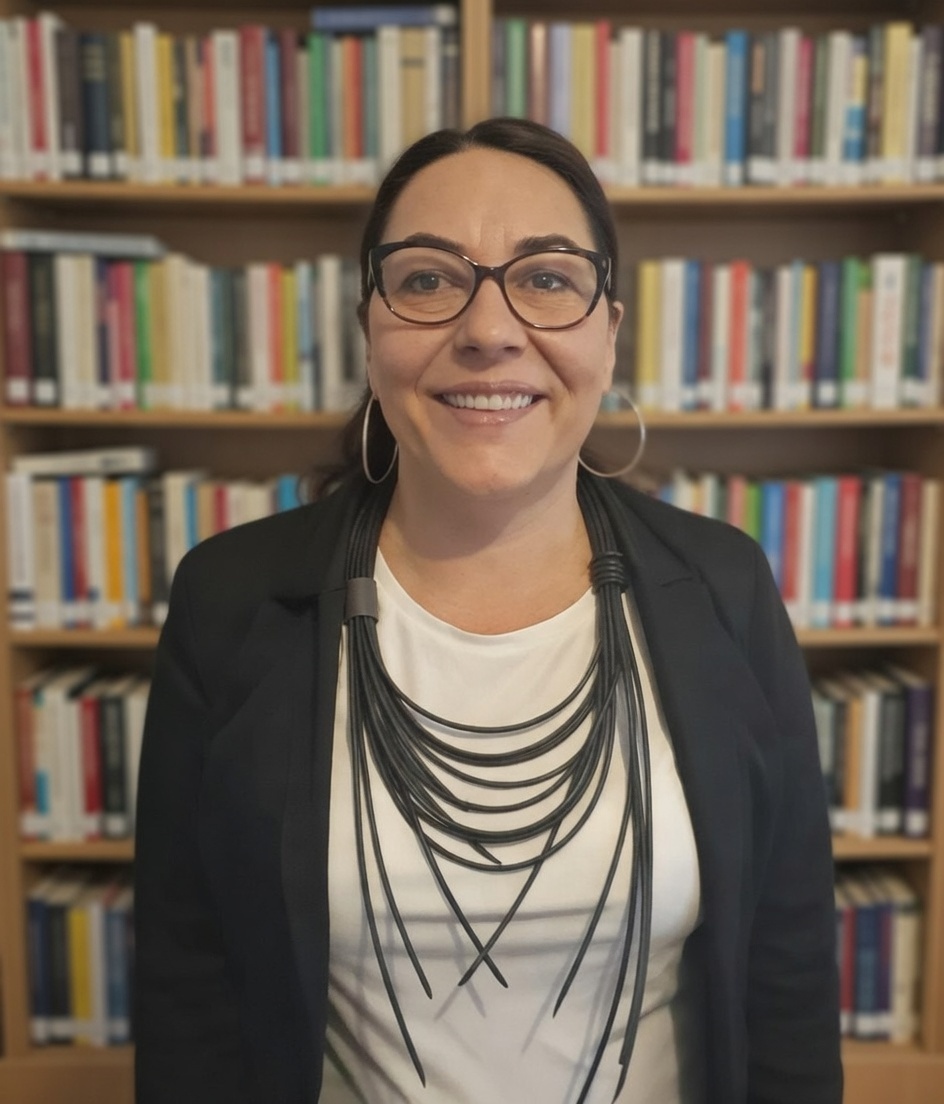
Gordana Đuretić brings to TDE Institute an uncommon combination: the ethnological and anthropological training of someone schooled in how societies make sense of themselves, and the fieldwork proximity of someone who lives and works inside the geography the Institute studies. Holding a degree in Ethnology and Anthropology from the University of Belgrade, a Master's in Management Sciences from Alfa University, and a doctorate from Union University — Nikola Tesla, where she is currently Associate Professor — her academic formation has always been concerned with how institutions manage change, how individuals navigate structural constraint, and how organisations behave under pressure. These are precisely the questions that migration governance makes most visible.
Her position in Serbia is not incidental to her research — it is constitutive of it. Serbia functions as one of the European Union's most important migration buffer zones, absorbing populations that the EU has chosen not to admit and governing them through a combination of bureaucratic suspension, humanitarian delegation, and strategic ambiguity. Đuretić studies this from within, interrogating how democratic states govern populations they refuse to recognise, and how the organisations charged with protecting those populations become, despite their intentions, instruments of the very exclusion they were established to resist.
When states retreat from their protection obligations in EU buffer zones, humanitarian organisations are compelled to fill the void — paradoxically sustaining the very systems of exclusion they seek to ameliorate.
At TDE Institute, Đuretić is a Research Associate within the Borders, Bodies and Democracy line of inquiry, leading the Compassionate Abandonment research stream. Her work examines how NGO service provision in EU buffer zones creates the illusion of a functioning protection system while political abandonment intensifies beneath it — trapping humanitarian actors between the ethical imperative to relieve suffering and the recognition that their relief enables the structural reproduction of that suffering.
Academic PositionAssociate Professor, Faculty of Business Studies and Law, Union University — Nikola Tesla, Belgrade, Serbia (2022–present). Courses: Business Ethics, Change and Conflict Management, Human Resource Management.